
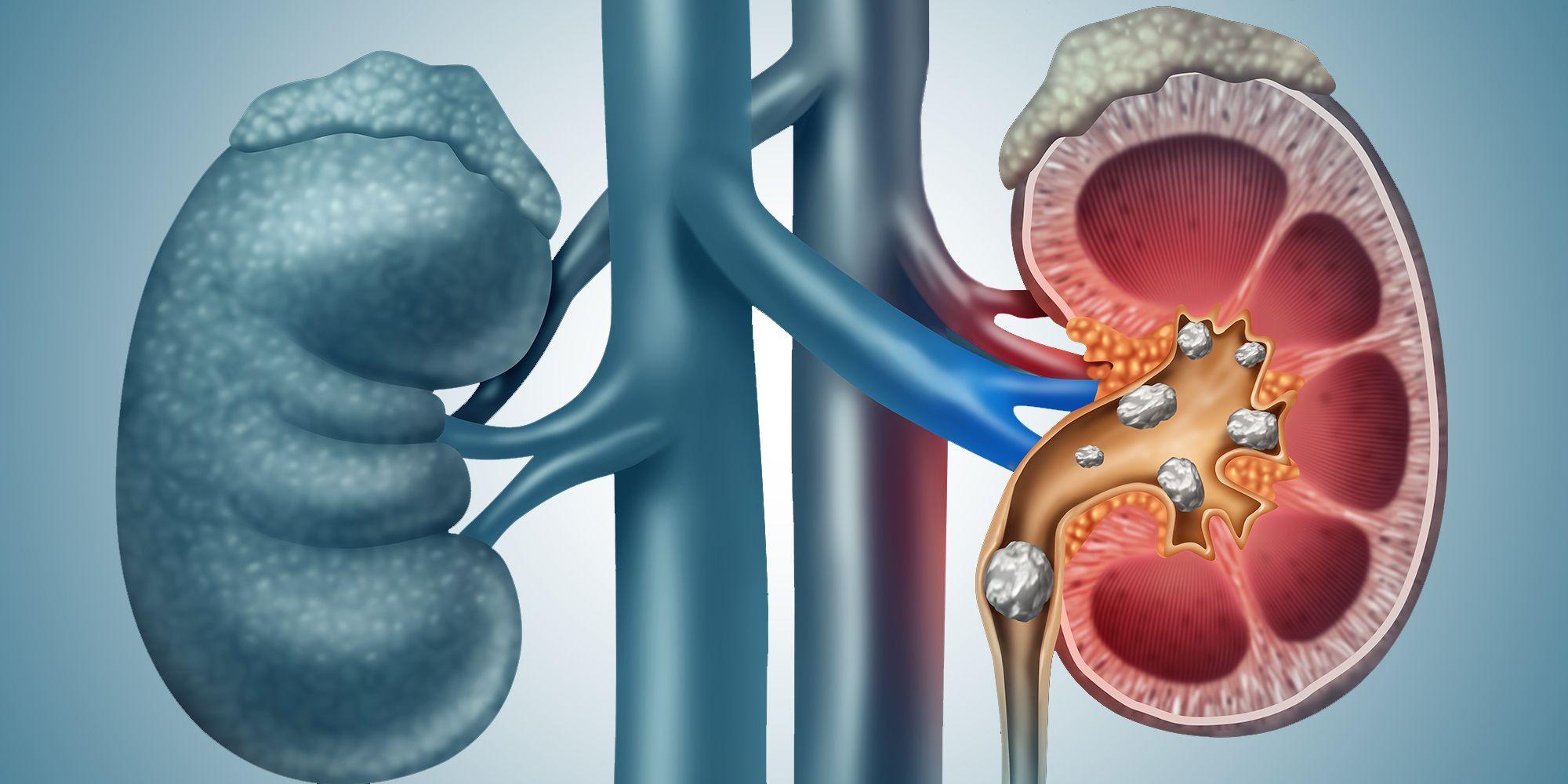
A new tool that takes multiple factors into account can accurately predict how likely a patient who experienced a painful kidney stone will develop another one in the future. The tool, which is described in an upcoming issue of the Journal of the American Society of Nephrology (JASN), could help patients and their doctors determine whether preventive measures are needed.
Kidney stones are common and affect approximately 6% to 9% of the population. The greatest concern of patients who have experienced a kidney stone is whether this excruciating painful event will ever happen again. Certain dietary recommendations and medications can help prevent another kidney stone from forming, but these can be burdensome, expensive, or cause side effects. “If we knew which patients were at high risk for another symptomatic kidney stone, then we could better advise patients on whether to follow stone prevention diets or take medications,” said Andrew Rule, MD (Mayo Clinic). “At the same time, patients who are at low risk of having another kidney stone may not need restrictive diets and medications.”
Dr. Rule and his colleagues conducted a study to help them develop a prediction tool that could be used by patients and their doctors to determine the risk of having a second symptomatic kidney stone after the first. The team reviewed the medical records of all adult first-time symptomatic stone formers residing in Olmsted County, Minnesota, from 1984 to 2003. Of the 2239 individuals identified, 707 experienced a recurrence through 2012.
From the information they gathered, the researchers developed the Recurrence of Kidney Stone (ROKS) nomogram that uses 11 questions about the patient to accurately calculate the probability of having another symptomatic kidney stone at 2, 5, or 10 years after the first stone.
Characteristics that predict a higher risk include younger age, male gender, white race, family history of kidney stones, blood seen in the urine, stone made of uric acid (rather than calcium), obstructing stone in the kidney pelvis, any additional non-obstructing stone, and any past painful event attributed to a kidney stone even though a stone was not seen.
The nomogram is available on the Internet at http://www.qxmd.com/calculate-online/nephrology/recurrence-of-kidney-stone-roks.
In an accompanying editorial, Brian Eisner, MD (Massachusetts General Hospital and Harvard Medical School) and David Goldfarb, MD (York Harbor VA Healthcare System and NYU School of Medicine) noted that for the nomogram to demonstrate value, it now should be tested prospectively in additional populations of stone formers. “Whether additional variables can be added to increase the usefulness of this tool will be of interest in the future,” they added.
###
Story Source:
The above story is based on materials provided by American Society of Nephrology (ASN). Note: Materials may be edited for content and length.
###
A. D. Rule, J. C. Lieske, X. Li, L. J. Melton, A. E. Krambeck, E. J. Bergstralh. The ROKS Nomogram for Predicting a Second Symptomatic Stone Episode. Journal of the American Society of Nephrology, 2014; DOI: 10.1681/ASN.2013091011
###
American Society of Nephrology (ASN)


