
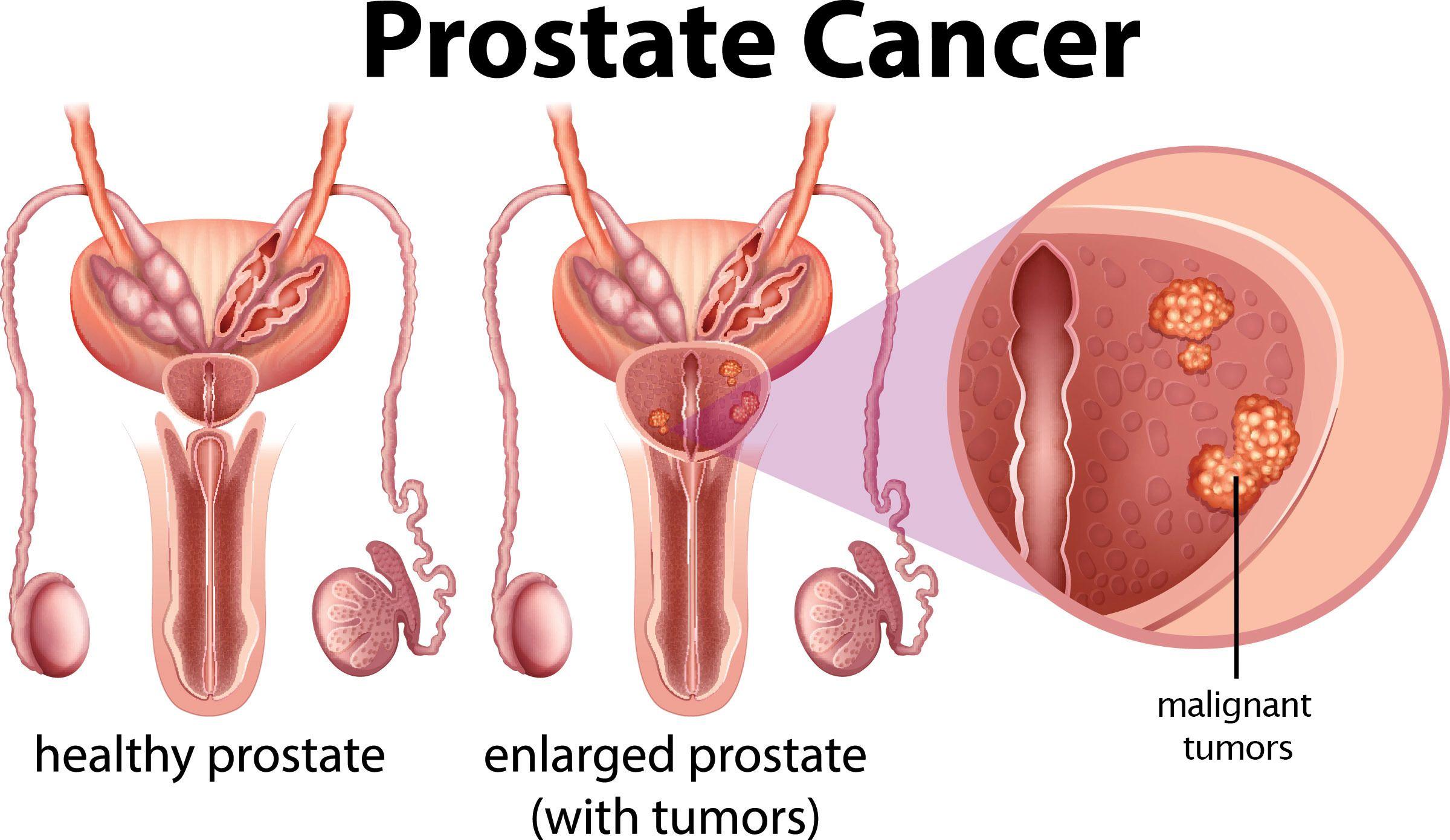
Even with the best available treatments, the median survival of patients with metastatic, hormone-refractory prostate cancer is only two to three years. Driven by the need for more effective therapies for these patients, researchers at VCU Massey Cancer Center and the VCU Institute of Molecular Medicine (VIMM) have developed a unique approach that uses microscopic gas bubbles to deliver directly to the cancer a viral gene therapy in combination with an experimental drug that targets a specific gene driving the cancer’s growth.
Recently published in the journal Oncotarget, this new study is the most recent in a long line of studies led by Paul B. Fisher, M.Ph., Ph.D., investigating the use of viral gene therapy to treat a variety of cancers. The treatment strategy uses a novel “cancer terminator virus” (CTV), which replicates exclusively in cancer cells delivering the cancer-specific, toxic cytokine gene mda-7/IL-24 directly to the tumor. The researchers added an experimental drug known as BI-97D6, which targets MCL-1 and other members of the Bcl-2 gene family that protect cancer cells from therapeutic agents, resulting in enhanced prostate cancer cell death while sparing healthy prostate epithelial cells in preclinical experiments involving advanced mouse models of prostate cancer. The therapy not only killed cells at the primary tumor site, but also in distant metastases by “bystander” antitumor activity driven by the secreted MDA-7/IL-24 protein.
“We are at a point in our research where we have validated the efficacy of this combination treatment approach in preclinical animal models, and we now need to define its safety through toxicology and pharmacology studies,” says Fisher, Thelma Newmeyer Corman Endowed Chair in Cancer Research and co-leader of the Cancer Molecular Genetics research program at VCU Massey, chairman of VCU School of Medicine’s Department of Human and Molecular Genetics and director of the VCU Institute of Molecular Medicine. “We are hopeful that this research will culminate in the development of a phase 1 clinical trial that will test the safety of this novel approach and potentially lead to an effective new therapy for advanced prostate cancer.”
When viruses attack their hosts, they introduce their genetic material into the host cell. This process essentially hijacks the cell in order to produce more copies of the virus. The CTV used in the study, Ad.tCCN1-CTV-m7, is a modified adenovirus—the kind of virus that typically causes mild respiratory infections. The scientists removed the genes controlling viral replication and that cause disease, and they added part of the controlling element of a gene known as CCN1 to cause the virus to replicate selectively in cancer cells. The scientists then engineered the virus to deliver the tumor-suppressing and -cell-death inducing gene mda-7/IL-24 into the cancer cells, generating a CTV. As the CTV continues to replicate, it causes the cells to produce and secrete mda-7/IL-24.
The mda-7/IL-24 gene was originally discovered by Fisher, who showed in previous studies that it prevents tumor growth and inhibits tumor blood vessel formation, promotes anti-tumor immune effects and stimulates a form of cell suicide known as apoptosis. The gene has also been shown to synergize with other cancer treatments. In the present study, the scientists demonstrated that the drug BI-97D6 increased cancer cell death caused by mda-7/IL-24, and it also helped defend against resistance to the viral gene therapy.
Critical to the therapy is the stealth delivery technique known as ultrasound-targeted microbubble destruction (UTMD). If injected directly into the bloodstream by itself, the CTV may get trapped in the liver or be removed by the body’s immune system. UTMD uses microscopic, gas-filled bubbles that can be paired with viral therapies, therapeutic genes and proteins, and imaging agents. The bubbles are released in a site-and target-specific manner via ultrasound, and, with appropriate modification of the therapeutic virus, can be imaged in real-time to track the delivery of the CTV to the tumor. Fisher and his colleagues are pioneering this approach and have already reported success in preclinical experiments utilizing UTMD technology and mda-7/IL-24 gene therapy in prostate and colorectal cancer models. UTMD has also been used elsewhere in clinical trials testing therapies for patients with heart disease.
“This approach holds promise for the treatment of many different cancers ,” says Fisher. “Our team is collaborating with researchers at Massey and at other institutions to move this research forward. We even plan to open a phase 1 clinical trial next year testing a different CTV expressing mda-7/IL-24 in patients with recurrent brain cancer.”
###
Fisher collaborated on this research with Devanand Sarkar, M.B.B.S., Ph.D., Harrison Scholar and member of the Cancer Molecular Genetics research program at Massey, Blick Scholar and associate professor in the Department of Human and Molecular Genetics at the VCU School of Medicine and associate scientific director of cancer therapeutics in the VIMM; Swadesh K. Das, Ph.D., member of the Massey Cancer Molecular Genetics research program, VIMM member and assistant professor in the VCU Department of Human and Molecular Genetics; Xiang-Yang Wang, Ph.D., Harrison Scholar and member of the Massey Cancer Molecular Genetics program, associate scientific director of immunology and infectious diseases in the VIMM and professor in the VCU Department of Human and Molecular Genetics; Luni Emdad, M.B.B.S., Ph.D., member of the Massey Cancer Molecular Genetics research program, VIMM member and assistant professor in the VCU Department of Human and Molecular Genetics; Siddik Sarkar, Ph.D., postdoctoral research scientist in the VCU Department of Human and Molecular Genetics; Bridget A. Quinn, Ph.D., M.D./Ph.D. student in the VCU Department of Human and Molecular Genetics; Xue-Ning Shen, M.D., senior research technician in the VCU Department of Human and Molecular Genetics; and Rupesh Dash, Ph.D., former postdoctoral research scientist in the VCU Department of Human and Molecular Genetics; Alexander L. Klibanov, Ph.D., associate professor at the University of Virginia; and Maurizio Pellecchia, professor at Sanford-Burnham Medical Research Institute.
This study was supported by National Institutes of Health/National Cancer Institute grant R01 CA168517, Department of Defense grants W81XWH-11-1-0186 and W81XWH-11-1-0480, the Natioanl Foundation for Cancer Research, and, in part, by VCU Massey Cancer Center’s NIH-NCI Cancer Center Support Grant P30 CA016059.
###
John Wallace
wallacej@vcu.edu
804-628-1550
Virginia Commonwealth University
Journal
Oncotarget


