Skip to content

Urgent urology symptoms What to do

New recommendations to prevent recurrent kidney stones

Urology TodayPublished January 29, 20152 min read
New test predicts individual’s risk of second kidney stone

Key points

  • In a new evidence-based clinical practice guideline published today in Annals of Internal Medicine, the American College of Physicians (ACP) recommends that people who have had a kidney stone increase their fluid intake to achieve at least two liters of urine per day to prevent another kidney stone from forming.
  • The evidence did not show any difference between tap water compared to a specific brand of mineral water.
  • The guideline authors note that doctors also recommend dietary changes to prevent recurring kidney stones, including reducing dietary oxalate (e.g., chocolate, beets, nuts, rhubarb, spinach, strawberries, tea, and wheat bran), reducing dietary animal protein and purines, and maintaining normal dietary calcium.
  • Story Source: The above story is based on materials provided by American College of Physicians.

In a new evidence-based clinical practice guideline published today in Annals of Internal Medicine, the American College of Physicians (ACP) recommends that people who have had a kidney stone increase their fluid intake to achieve at least two liters of urine per day to prevent another kidney stone from forming. If increased fluid intake fails to reduce the formation of stones, ACP recommends adding medication with a thiazide diuretic, citrate, or allopurinol.

“Increased fluid intake spread throughout the day can decrease stone recurrence by at least half with virtually no side effects,” said Dr. David Fleming, president, ACP. “However, people who already drink the recommended amount of liquids, or when increased fluid intake is contraindicated, should not increase their fluid intake.”

The evidence did not show any difference between tap water compared to a specific brand of mineral water. The evidence indicated that a decrease in consumption of soft drinks acidified by phosphoric acid, such as colas, is associated with a reduced risk of stone recurrence. (Fruit-flavored soft drinks are often acidified by citric acid.)

The evidence showed that thiazide diuretics, citrates, or allopurinol effectively reduced recurrence of stones formed of calcium—the most common type of kidney stone—in patients with at least two past stones. No studies directly compared the drugs to each other.

The guideline authors note that doctors also recommend dietary changes to prevent recurring kidney stones, including reducing dietary oxalate (e.g., chocolate, beets, nuts, rhubarb, spinach, strawberries, tea, and wheat bran), reducing dietary animal protein and purines, and maintaining normal dietary calcium.

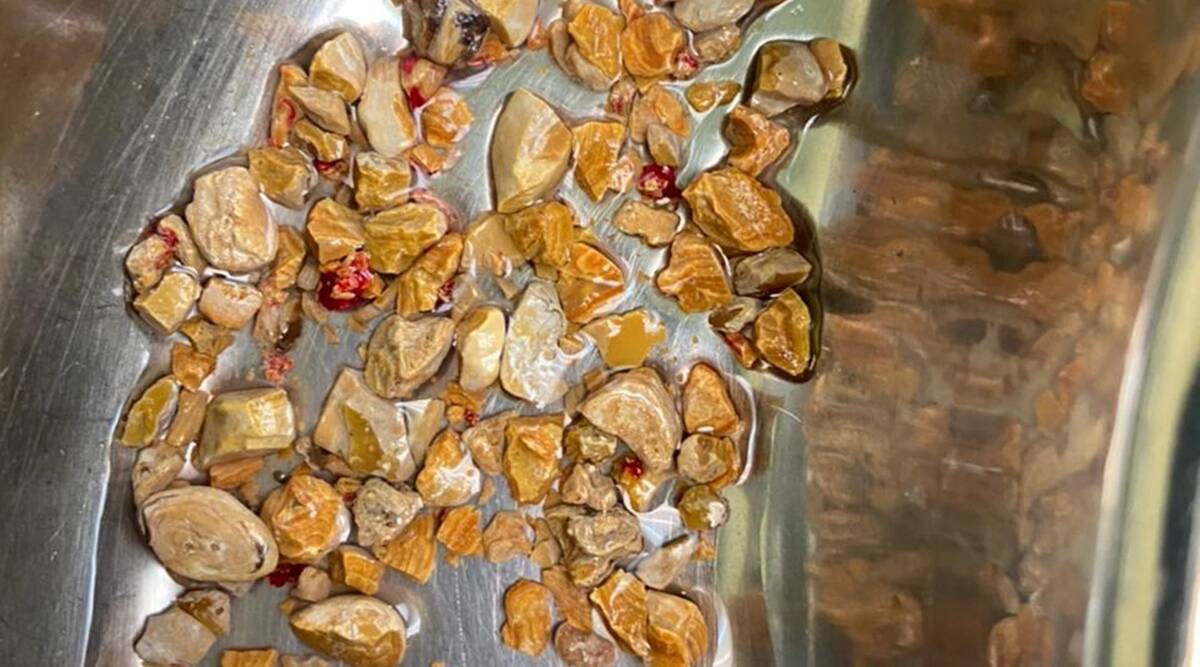
A kidney stone occurs when tiny crystals in urine stick together to form a stone. About 13 percent of men and 7 percent of women in the United States will develop a kidney stone during their lifetime. Studies show that the recurrence rate of kidney stones within five years of an initial stone ranges from 35 to 50 percent without treatment.

Story Source:
The above story is based on materials provided by American College of Physicians. Note: Materials may be edited for content and length.

###

Journal Reference:

Amir Qaseem, Paul Dallas, Mary Ann Forciea, Melissa Starkey, Thomas D. Denberg. Dietary and Pharmacologic Management to Prevent Recurrent Nephrolithiasis in Adults: A Clinical Practice Guideline From the American College of Physicians. Annals of Internal Medicine, 2014; 161 (9): 659 DOI: 10.7326/M13-2908

###

American College of Physicians

The content on this site is for information only and is not a substitute for professional medical advice, diagnosis or treatment. If you cannot pass urine, have a fever with back or side pain, or sudden severe pain in the testicle, call 911 or go to an emergency department.

Urinary symptoms?

Weak stream, urgency, up at night? Score it in two minutes.

Seven questions from the International Prostate Symptom Score show whether symptoms are mild, moderate or severe, and when to see a doctor.

Take the symptom score

When to get help

Most urology problems can wait for an appointment. These can’t.

Call 911 or go to an emergency department if you have any of these:

  • You cannot pass urine at allAcute urinary retention: a painful, swollen bladder. It needs a catheter, often within hours.
  • Fever or chills with back or side painA blocked, infected kidney (for example behind a stone) can turn into sepsis quickly.
  • Sudden, severe pain in a testiclePossible testicular torsion. The testicle can often be saved only within about 6 hours.
  • An erection lasting over 4 hoursPriapism. Without treatment it can cause permanent damage.
Call 911

Outside the US, call your local emergency number.

See a doctor within days

  1. 01Blood in your urineEven once, and even without pain. Usually harmless, but it is the most common first sign of bladder and kidney cancer.
  2. 02Burning, frequent or cloudy urineTypical of a urinary tract infection, which usually clears with treatment.
  3. 03A lump or swelling in a testicleMost lumps are benign; testicular cancer is very treatable when found early.

General guidance only. If you are unsure how urgent a symptom is, call your doctor or a nurse advice line.

