
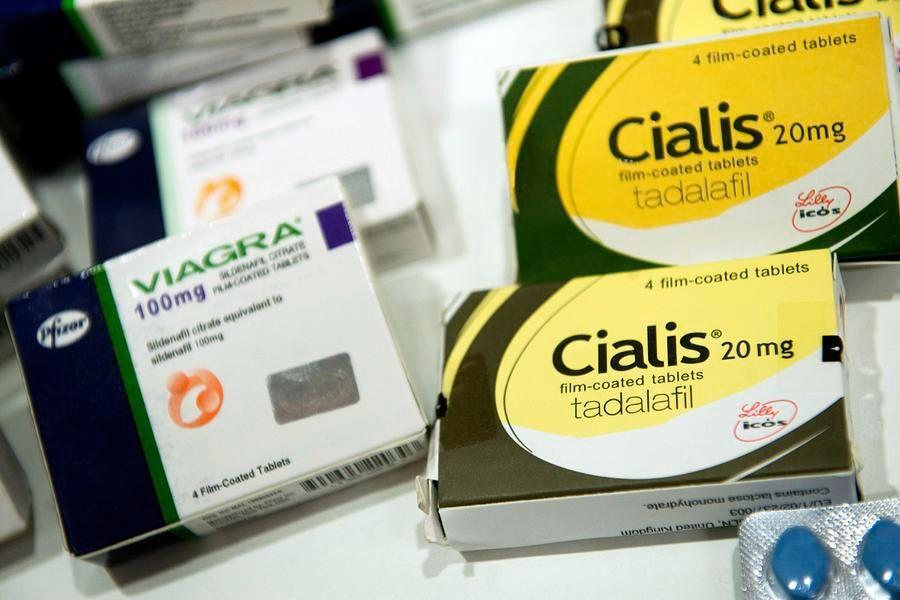
New research failed to support the hypothesis that phosphodiesterase-5 (PDE5) inhibitors like sildenafil (Viagra) and tadalafil (Cialis) are promising drug repurposing candidates for Alzheimer’s disease and dementia.
Using four analytic approaches designed to address potential biases, PDE5 inhibitors did not reduce the risk of Alzheimer’s and related dementia compared with other drugs used for pulmonary arterial hypertension (PAH), showed Rishi Desai, MS, PhD, of Brigham and Women’s Hospital and Harvard Medical School in Boston, and colleagues.
The findings, published in Brain Communications, are part of the ongoing NIH DREAM (Drug Repurposing for Effective Alzheimer’s Medicines) initiative.
PDE5 inhibitors work by relaxing smooth muscle cells. Sildenafil and tadalafil are approved treatments for erectile dysfunction and PAH.
The new DREAM study findings conflict with a recent analysis in Nature Aging that suggested sildenafil users were 69% less likely to develop Alzheimer’s disease than non-sildenafil users.
“Major differences in the design of these two investigations likely explain this inconsistency,” co-author Madhav Thambisetty, MD, PhD, of the National Institute on Aging, told MedPage Today.
In the Nature Aging analysis, Feixiong Cheng, PhD, of the Cleveland Clinic Genomic Medicine Institute, and colleagues compared the risk of incident Alzheimer’s disease in sildenafil users against people who used antihypertensive agents or type 2 diabetes drugs.
“This design choice is likely to result in comparison of individuals with erectile dysfunction — which is by far the most common indication for sildenafil — to generally older individuals with diabetes or hypertension,” Thambisetty observed.
“Since worse cardiometabolic health is a well-recognized risk factor for Alzheimer’s disease, and seeking treatment for erectile dysfunction is likely reflective of a certain level of preserved physical and cognitive function, we believe that results from [Cheng’s group] can be at least partly explained by severe confounding by indication,” he pointed out.
“We restricted our analyses to an alternative indication for PDE5 inhibitors — PAH — and selected an equivalent comparator drug that is used for the same indication to minimize confounding by indication,” Thambisetty stated.
In rodents, sildenafil has been shown to improve memory and cognitive function, help synaptic plasticity and learning, and reduce amyloid burden. Tadalafil also has improved memory and learning and lowered amyloid in rodents. “However, results in human studies have been inconsistent,” Desai and colleagues noted.

Using Medicare fee-for-service claims data from 2007 through 2018, DREAM study researchers matched 2,888 patients with PAH on PDE5 inhibitors (73.6% sildenafil, 26.4% tadalafil) with 2,888 comparable people on endothelin receptor antagonists.
Erection issues are plenty common, even in guys who aren’t as old as the famous Viagra pitchman, former senator Bob Dole. Seven percent of 18- to 29-year-old men and 9 percent of 30- to 39-year-olds are unable to achieve orgasm, according to a study in the Journal of the American Medical Association.
Mean age of the cohort was 74, and 69% were women. Overall, 90% had hypertension, 72% had heart failure, and 43% had atrial fibrillation.
The research group used four analytic approaches to counter possible biases like informative censoring, reverse causality, and outcome misclassification:
- An as-treated follow-up approach
- An as-started follow-up approach with a 6-month induction period
- An approach that incorporated a 6-month symptoms-to-diagnosis period
- An approach using a high-specificity outcome definition of dementia
- In all four analyses, PDE5 inhibitors were not associated with reduced risk for Alzheimer’s and dementia. Hazard ratios were 0.99 (95% CI 0.69–1.43), 1.00 (95% CI 0.71–1.42), 0.67 (95% CI 0.43–1.06), and 1.15 (95% CI 0.57–2.34), respectively.
The researchers also tested whether sildenafil had effects on cell culture-based Alzheimer’s models and found no evidence that the drug corrected molecular abnormalities associated with Alzheimer’s disease.
The study may have been underpowered to detect differences of small magnitude, Desai and colleagues noted. Evaluating people with PAH allowed for unbiased comparisons of treatment effects, but this population is atypical with a high underlying cardiometabolic disease burden, they acknowledged.
How Do Erectile Dysfunction Drugs Work?
The class of drugs that Levitra, Viagra, Stendra, and Cialis belong to are called PDE5 inhibitors. They work by relaxing tight blood vessels, allowing more blood to surge into the penis and cause an erection, says Gregory Bales, M.D., an associate professor of urology at the University of Chicago.
The little pills do the trick for more than two-thirds of men with erectile dysfunction (ED). They also work for guys who simply need them for a short time to get their “confidence back,” says Michael Eisenberg, M.D., director of male reproductive medicine and surgery at Stanford University.
###
Disclosures
The DREAM study is funded by the intramural program of the National Institute on Aging.
Desai disclosed relationships with Bayer, Vertex, and Novartis. Co-authors dislcosed relationships with Bristol-Myers Squibb, Merck, Pfizer, Lilly, Intra-Cellular Therapies, Eisai, Boehringer Ingelheim, Aetion, Roche, AbbVie, Danisco, and Med Tech Epi.


